

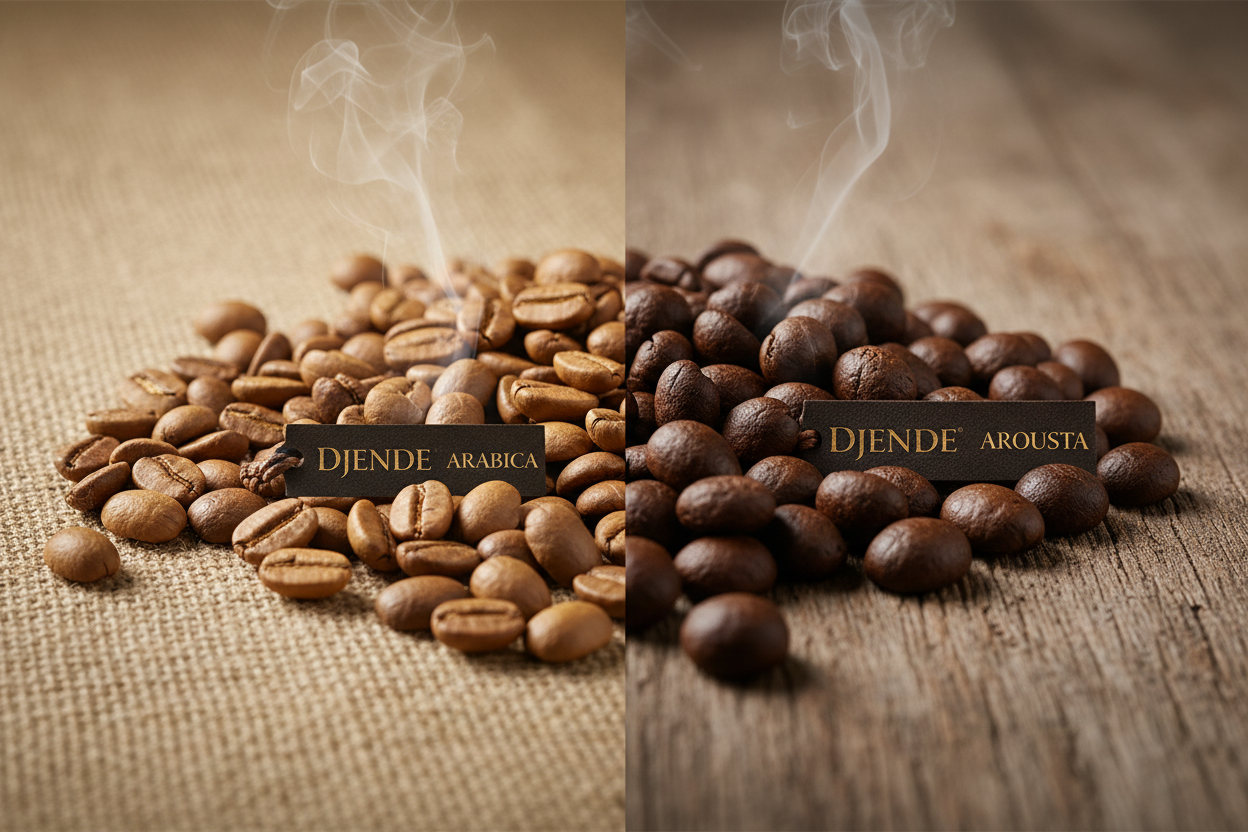
Arabica or Robusta: What Is the Real Difference?
Origin, taste, caffeine, cultivation, price — everything you need to know to choose with confidence
Arabica. Robusta. These two words appear on almost every coffee label — and yet the vast majority of consumers don't know exactly what sets them apart. That's not a criticism: nobody has really explained it. So here is your guide — no unnecessary jargon, just the facts that really matter for your cup.
1. Two Species, Two Origins
|
☕ Arabica Coffea arabica. Native to the forests of Ethiopia, cultivated since the 9th century. It is the oldest species grown for coffee. It represents approximately 60% of world production. Its name comes from its spread around the world via Yemen and the Arab world. |
💪 Robusta Coffea canephora var. Robusta. Native to the Congo basin, in Central and West Africa — including Cameroon. Discovered and commercially cultivated in the 19th century. It represents approximately 40% of world production. Its name reflects its natural resilience to disease and pests. |
2. The Complete Comparison: Everything That Sets Them Apart
Here are the fundamental differences between the two species — in terms of cultivation, bean, taste and use:
|
Criterion |
☕ Arabica |
💪 Robusta |
|
Botanical species |
Coffea arabica |
Coffea canephora var. Robusta |
|
Natural origin |
Ethiopia (highland forests) |
Congo basin, Central Africa |
|
Growing altitude |
1,000 – 2,200 m |
300 – 900 m |
|
Ideal temperature |
15 – 24°C |
24 – 30°C |
|
Rainfall |
1,200 – 2,200 mm/year |
2,000 – 3,000 mm/year |
|
Disease resistance |
Fragile, susceptible to rust |
Naturally very resilient |
|
Bean shape |
Elongated, flat, S-shaped groove |
Round, convex, straight groove |
|
Caffeine content |
0.8 – 1.5% |
1.7 – 4% |
|
Natural sugar content |
Higher |
Lower |
|
Lipid content |
60% higher than Robusta |
Lower |
|
Dominant taste |
Smooth, fruity, floral, slightly acidic |
Intense, full-bodied, bitter, earthy |
|
Mouthfeel |
Light to medium, silky |
Full, dense, powerful |
|
Bitterness |
Soft, balanced |
Pronounced, persistent |
|
Acidity |
Present, bright, pleasant |
Low to none |
|
Espresso crema |
Fine, light |
Thick, dense, persistent — ideal for espresso |
|
Yield per hectare |
Low (1 – 4 t/ha) |
High (2 – 5 t/ha) |
|
Market price |
Higher |
More accessible |
|
Main use |
Filter, French press, cold brew, specialty coffee |
Espresso, instant coffee, blends, strong coffee |
3. Taste: The Difference That Really Matters in Your Cup
|
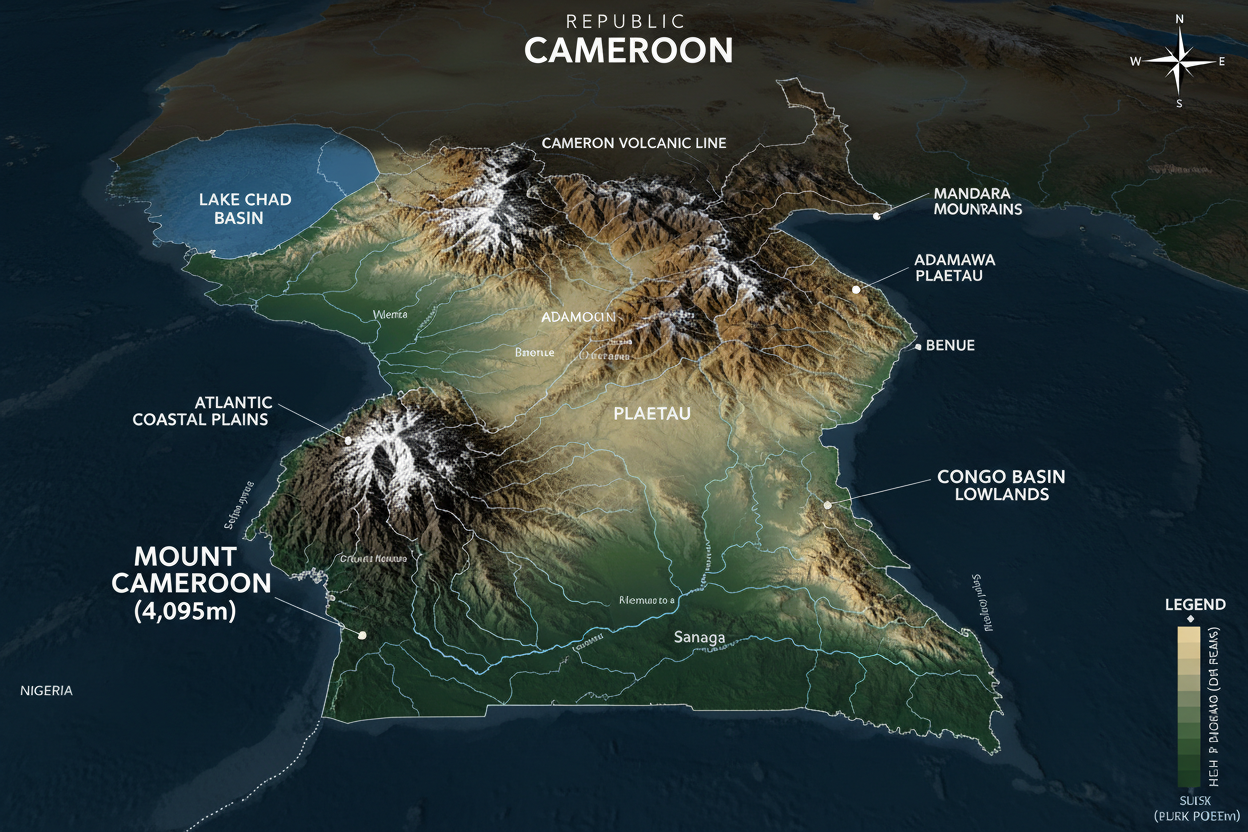
DJENDE Cameroonian Arabica Grown on the western highlands (Bamiléké, Bamenda) and Mount Cameroon, between 1,200 and 2,000 m altitude. Its slow high-altitude ripening concentrates natural sugars and develops rare aromatic complexity: red fruits, caramel, floral, hazelnut. Low bitterness, soft acidity, silky body. Ideal drunk without sugar. |
DJENDE Djende I Robusta Grown at Djende I, Doumaintang commune, Haut-Nyong, between 650 and 900 m, under dense equatorial forest cover. Red ferrallitic soil, four seasons, hand harvesting for four generations. Profile: intense dark chocolate, soft spices, woody, long finish. Full body, dense crema, ideal as espresso. |
4. Caffeine: Which One Really Wakes You Up?
This is one of the most concrete differences between the two species — and one of the least known to the general public.
|
|
☕ Arabica |
💪 Robusta |
What it means for you |
|
Caffeine in the bean |
0.8 – 1.5% |
1.7 – 4% |
Robusta contains up to 2.5x more caffeine |
|
Stimulant effect |
Gentle, gradual |
Powerful, rapid |
Robusta = energy boost, Arabica = gentle wake-up |
|
Recommended use |
All day, even evening |
Morning, pre-sport, long days |
Adjust to your own caffeine sensitivity |
|
Caffeine as defence |
Low → susceptible to pests |
High → natural insect repellent |
This is why Robusta is naturally more resilient |
5. Cultivation: Why Arabica Costs More
Many consumers think Arabica costs more because it is 'better'. The truth is more nuanced: it costs more because it is far more difficult and costly to grow.
• Arabica: only grows at altitude (1,000–2,200 m) in a narrow climatic zone → high logistical and transport cost
• Arabica: highly susceptible to disease (rust, anthracnose), pests (coffee berry borer) and frost → frequent treatment, significant losses
• Arabica: low yield (1–4 tonnes/ha) → higher unit price to cover costs
• Robusta: naturally disease-resistant thanks to its high caffeine content that repels insects
• Robusta: grows at lower altitude, fewer logistical constraints → lower production cost
• Robusta: higher yield (2–5 tonnes/ha) → lower unit market price
Important: a lower price does not mean lower quality. A well-grown Robusta, hand-harvested and traced from its source — like that from Djende I — has a gustatory and ethical value that many industrial Arabicas do not match.
6. How to Choose: Your Personal Guide
Neither Arabica nor Robusta is universally 'the best'. The right coffee is the one that matches your moment, your taste and your lifestyle.
|
If you like / If you want… |
Choose |
At DJENDE |
|
A smooth, aromatic, fruity, low-bitterness coffee |
☕ Arabica |
DJENDE Highland Arabica |
|
An intense, full-bodied, long-finish, perfect espresso |
💪 Robusta |
DJENDE Djende I Robusta, Haut-Nyong |
|
Low caffeine, possible evening coffee |
☕ Arabica |
DJENDE Arabica |
|
A powerful morning energy boost |
💪 Robusta |
DJENDE Robusta |
|
A subtle filter or French press coffee |
☕ Arabica |
DJENDE Arabica |
|
An espresso with thick, persistent crema |
💪 Robusta |
DJENDE Robusta |
|
The complexity of both worlds |
☕ + 💪 Blend |
DJENDE Arabica 30% + Robusta 70% Blend |
|
A traceable, directly sourced, ethical coffee |
☕ or 💪 |
The full DJENDE range — from Doumaintang to your cup |
7. At DJENDE: Both, From Cameroon, With Complete Traceability
Most coffee brands sell you either Arabica or Robusta, without really telling you where it comes from. DJENDE makes the opposite choice: offering both species, directly sourced from Cameroonian families and GICs, with complete traceability from village to cup.
• Cameroonian Arabica: western highlands, hand-harvested, smooth and aromatic
• Djende I Robusta: Doumaintang commune, Haut-Nyong, equatorial forest, 4 generations of coffee growers
• Processed and packaged in Canada to Canadian quality standards
• Direct sourcing without exploitative middlemen — the producer is fairly paid
• Every purchase contributes to the education of partner farmers' children
✨ Try both — and choose your favourite
Highland Arabica or Djende I Robusta — directly from Cameroon to your cup.
DJENDE • From Our Lands to Your Cup • djende.ca • @djende.ca

Leave a comment
This site is protected by hCaptcha and the hCaptcha Privacy Policy and Terms of Service apply.