

What Cameroonian Soil Puts in Your Cup
From the East to Mount Cameroon: Terroir, Altitude, Soil and Ancestral Know-How
Djende is first and foremost the name of a place. A land in Eastern Cameroon, covered in dense forests, bathed in regular rainfall, where families have been growing coffee for generations. This is where DJENDE Robusta is born — and it is this specific terroir that gives it its character: intense, chocolatey, with a long finish that lingers on the palate.
🏆 NEWS: In March 2026, Cameroon's first Centre of Excellence for Robusta post-harvest processing was inaugurated at Baditoum, Eastern Region — officially confirming the East as the home of Cameroonian specialty Robusta.
1. Eastern Cameroon: The Birthplace of DJENDE Robusta
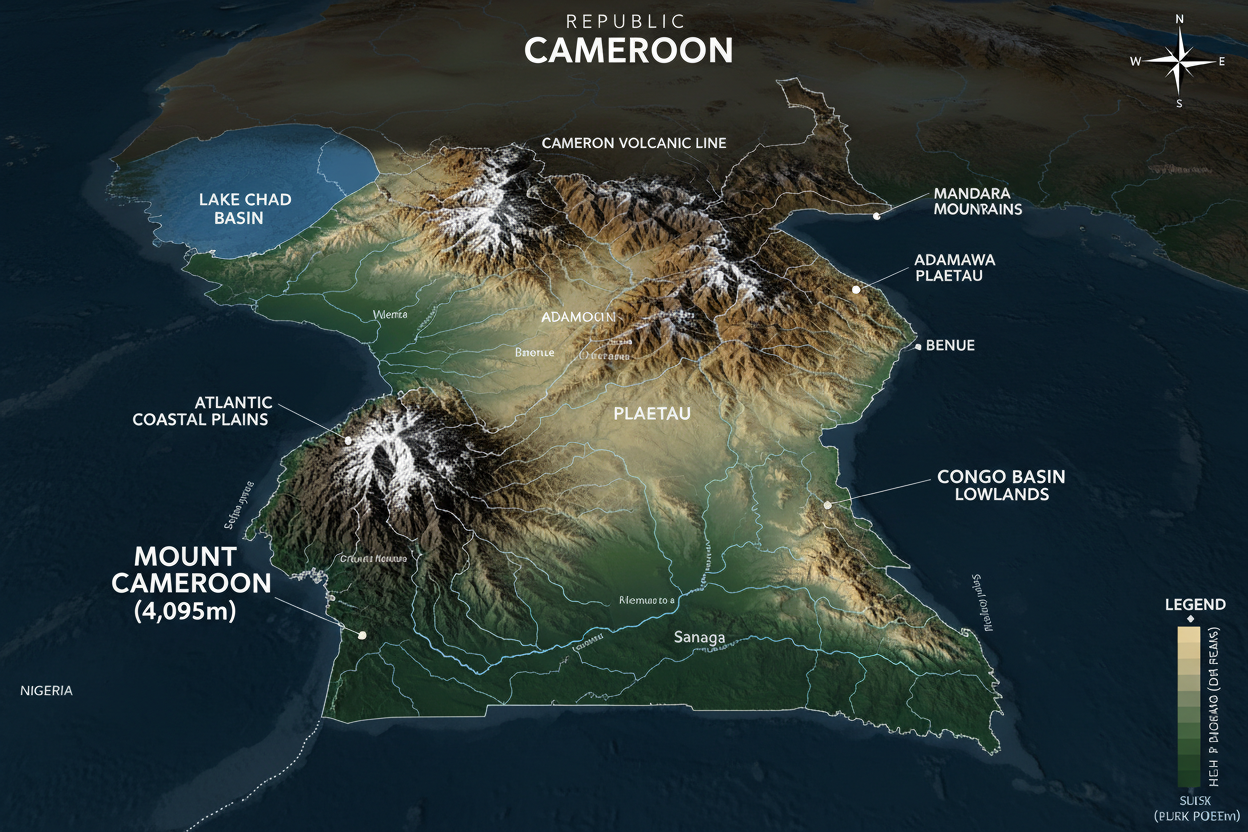
The Eastern region is one of the least known among coffee enthusiasts — and yet it is one of the richest in potential. Covered more than 90% by dense equatorial forest, it offers the Robusta coffee plant exceptional natural conditions that few regions in the world can replicate.
• Altitude: between 650 and 900 m on the southern Cameroonian plateau — ideal for Robusta, allowing slow, even ripening
• Ferrallitic tropical soils: clay-rich, deep, highly porous and well-drained — retaining the necessary moisture without waterlogging the roots
• Bimodal rainfall: two rainy seasons per year (1,500–1,800 mm annually) feeding the coffee plant naturally, without artificial irrigation
• Stable temperature: around 24°C annual average — moderated by altitude and the dense forest canopy
• Natural shade from equatorial forest: coffee plants grow under tree cover, developing more complex aromas and softer bitterness
"Here, the coffee plant doesn't need to be taught how to grow. The forest does the work. We just watch over it."
— DJENDE partner farmer, Eastern Cameroon
2. The Western Highlands: Arabica Country
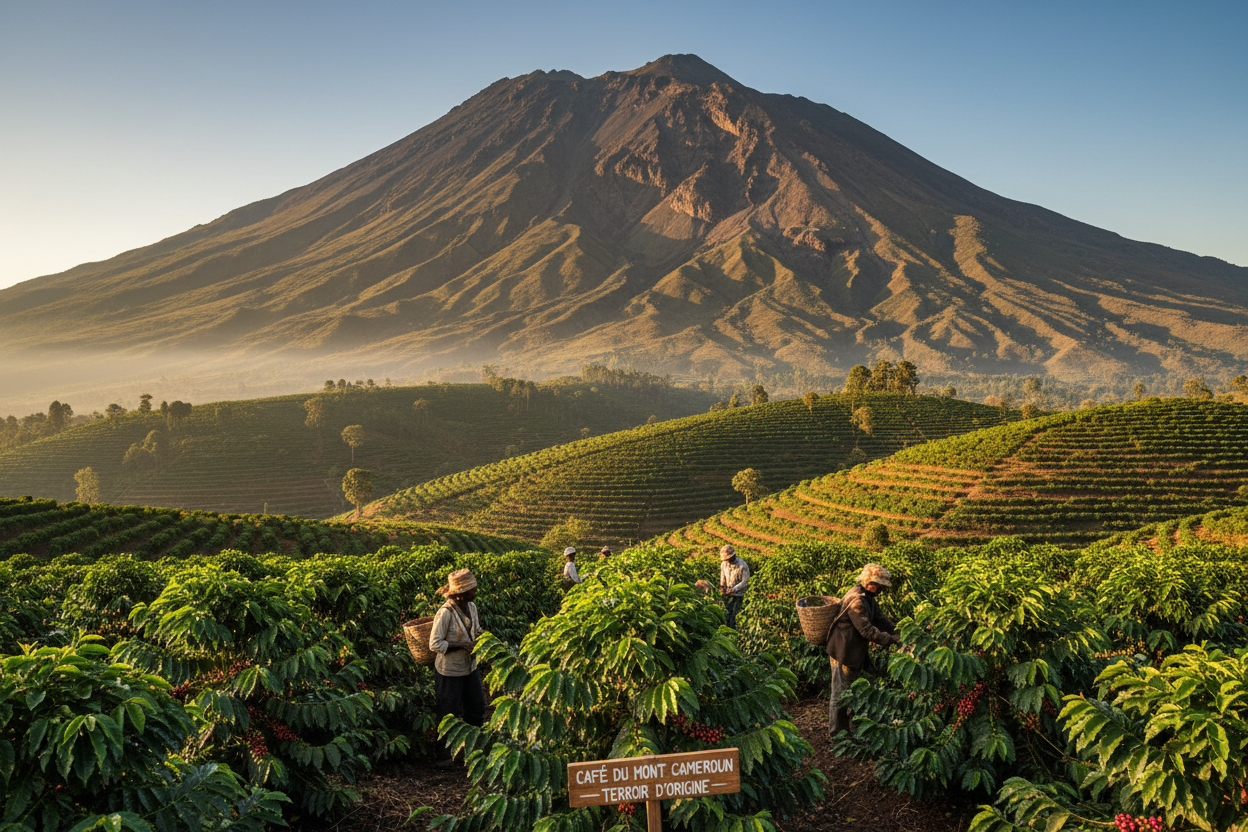
While the East is home to DJENDE Robusta, the western highlands and Mount Cameroon are Arabica country. These two worlds are complementary — and together, they define DJENDE's full aromatic range.
• Western Highlands (Bamiléké, Bamenda): 1,200–1,800 m — rich volcanic soils, mild temperatures 18°C–22°C → red fruit, caramel, floral notes
• Mount Cameroon (Southwest): 800–2,000 m — young volcanic soil, natural mist, perfect drainage → bright acidity, milk chocolate, roasted hazelnut
• Transition zone (Moungo, Littoral): 400–800 m — mid-altitude Robusta, softer and fruitier than lowland Robusta
3. Every Soil Tells a Different Cup
Here's how each region's terroir translates directly into your cup:
|
Region |
Soil Type |
Altitude |
Coffee Grown |
Characteristic Aromas |
|
Eastern Cameroon (DJENDE Birthplace) |
Ferrallitic tropical clay-rich, porous |
650–900 m |
Robusta |
Dark chocolate, spices, woody, soft bitterness, long finish |
|
Western Highlands (Bamiléké, Bamenda) |
Mineral-rich volcanic |
1,200–1,800 m |
Arabica |
Red fruits, caramel, floral, soft acidity |
|
Mount Cameroon (Southwest) |
Young volcanic highly porous |
800–2,000 m |
Premium Arabica |
Hazelnut, milk chocolate, citrus, silky body |
|
Transition zone (Moungo, Littoral) |
Fertile clay-silt |
400–800 m |
Soft Robusta |
Milk chocolate, caramel, less bitter than lowland |
4. Family Heritage: When Coffee Is Passed Down Like an Art Form
In Eastern Cameroon as in the highlands, coffee is not an industrial crop. It is a heritage. The same families have been cultivating the same varieties on the same plots for two, three, sometimes four generations — and it is this heritage that preserves the natural aromas no industrial process can replicate.
|
Stage |
Ancestral Gesture |
Why It Preserves Flavour |
|
Harvesting |
Hand-picking cherry by cherry at perfect red ripeness |
Only peak-sugar beans → no green bitterness, concentrated aromas |
|
Sorting |
Immediate manual visual sorting after harvest |
Eliminates damaged beans → homogeneous batch, pure cup |
|
Fermentation |
Natural dry processing for Eastern Robusta, wet process for Western Arabica |
Preserves the aroma precursors specific to each terroir |
|
Drying |
On raised beds in shade or gentle sun, turned by hand |
Slow drying → preserves essential oils → natural chocolate, hazelnut |
|
Storage |
In parchment in jute sacks, away from humidity and light |
Parchment protects the bean until roasting → maximum freshness |
5. What All This Puts in Your Cup
When terroir, altitude, soils and ancestral techniques all come together, here's what you discover depending on your brew method:
|
Brew Method |
Recommended Coffee |
Dominant Aromas |
Mouth Experience |
|
Espresso / Moka |
Eastern Robusta |
Intense dark chocolate, spices, woody |
Powerful, creamy, long persistent finish |
|
French press |
Highland Arabica |
Caramel, hazelnut, milk chocolate |
Round, smooth, medium body |
|
Filter / Pour-over |
Mount Cameroon Arabica |
Red fruits, floral, light citrus |
Light, delicate, highly aromatic |
|
Cold brew |
Arabica + Robusta blend |
Cold chocolate, caramel, vanilla |
Naturally sweet, very smooth |
|
Long coffee |
Eastern Robusta |
Soft chocolate, attenuated spices |
Balanced, warming, accessible |
These profiles are the direct result of specific soils, specific altitudes, specific gestures. DJENDE does one thing: make sure nothing is lost between the soils of Eastern Cameroon and your Canadian cup.
✨ Ready to taste Eastern Cameroon in your cup?
Discover our Eastern Robusta and Highland Arabica — directly from the lands to your cup.
👉 www.djende.ca
DJENDE • From Our Lands to Your Cup • djende.ca • @djende.ca

Leave a comment
This site is protected by hCaptcha and the hCaptcha Privacy Policy and Terms of Service apply.