

Why Cameroonian Coffee Is Aromatically Unique
A Sensory Journey into the Heart of DJENDE's Lands
Close your eyes. You take a sip. And then — something unexpected: a fruity note, almost like a wild cherry. Then caramel. Then a gentle roundness that lingers on the palate. This isn't magic. This is Cameroon.
1. A Terroir Found Nowhere Else
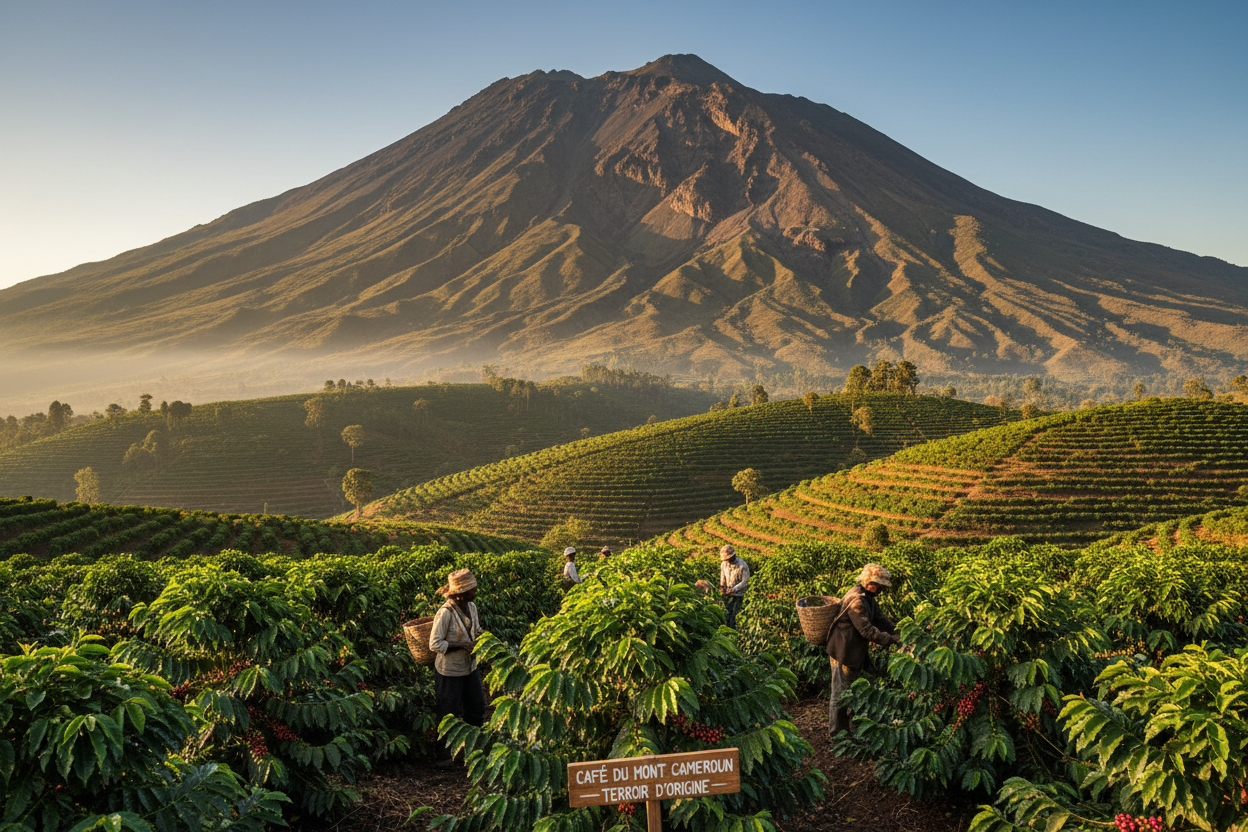
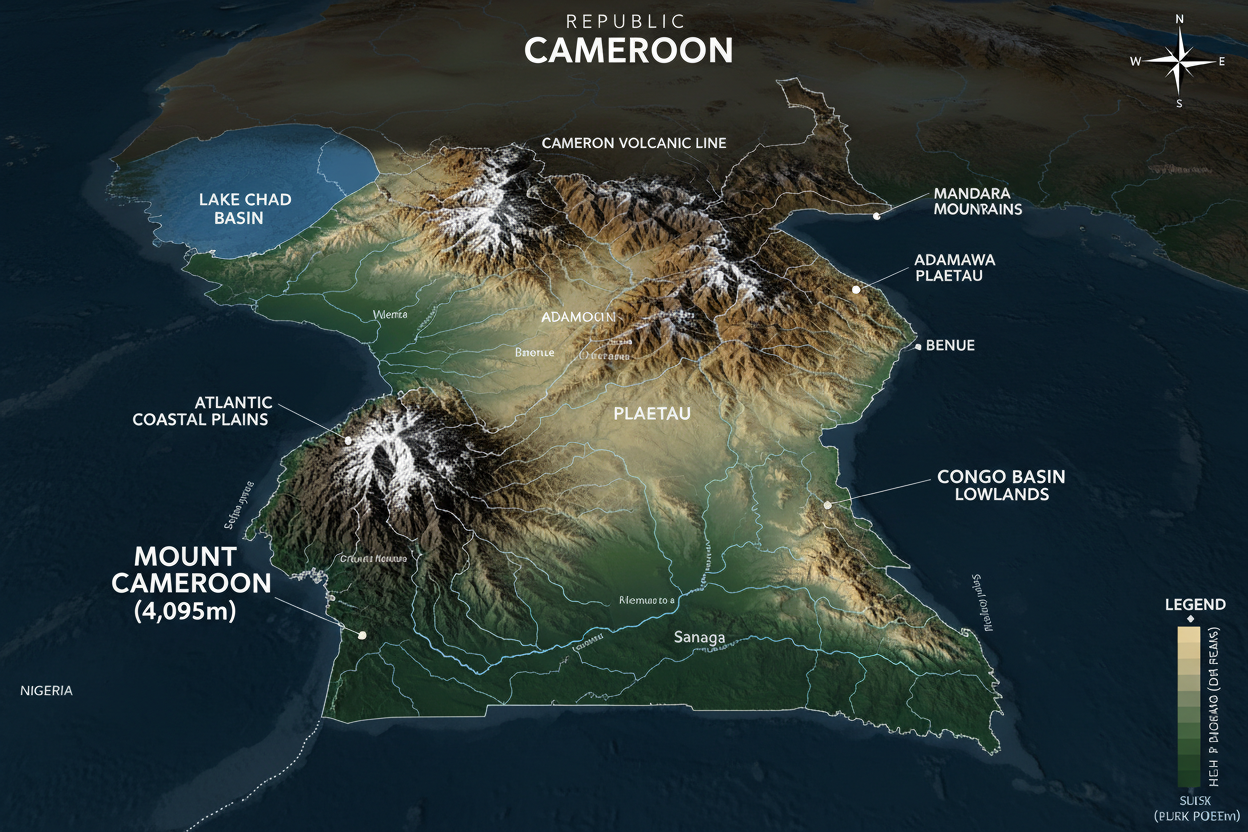
Cameroon occupies a rare geographical position on the world coffee map. Often called "Africa in miniature", it brings together in a single country the climatic and geological conditions that most coffee-growing nations only partially possess.
What makes Cameroonian terroir exceptional:
• Altitude: the western highlands and Mount Cameroon reach 2,000 to 4,000 metres — an altitude that slows cherry ripening and concentrates aromas
• Volcanic soil: rich in minerals, it feeds the bean a rare gustative complexity
• Natural rainfall: no artificial irrigation — rain does the work, at the right pace
• Mild, stable temperatures: between 18°C and 24°C year-round in production areas
• Natural forest shade: coffee plants grow under tree cover, protecting the bean and developing more subtle notes
2. Arabica and Robusta: Two Characters, One Land
Cameroon is one of the few African countries to grow both major coffee species under optimal conditions. Far from competing, Cameroonian Arabica and Robusta complement each other — each with its own aromatic signature.
|
|
☕ Cameroonian Arabica |
💪 Cameroonian Robusta |
|
Aromatic profile |
Red berries, caramel, hazelnut, floral |
Dark chocolate, earth, spices, woody |
|
Mouthfeel |
Light to medium, silky |
Full, intense, structured |
|
Bitterness |
Soft, balanced |
Pronounced, persistent |
|
Acidity |
Bright and pleasant |
Low to none |
|
Caffeine |
Lower |
Twice as much as Arabica |
|
Best for |
Filter, French press, cold brew |
Espresso, long coffee, blends |
|
Growing altitude |
1,200 – 2,000 m |
300 – 900 m |
3. Hand Harvesting: The Secret Machines Can't Replicate
On large industrial plantations, harvesting is mechanical. A machine passes between the rows and shakes everything — ripe beans, green beans, damaged beans. Everything ends up in the same bag.
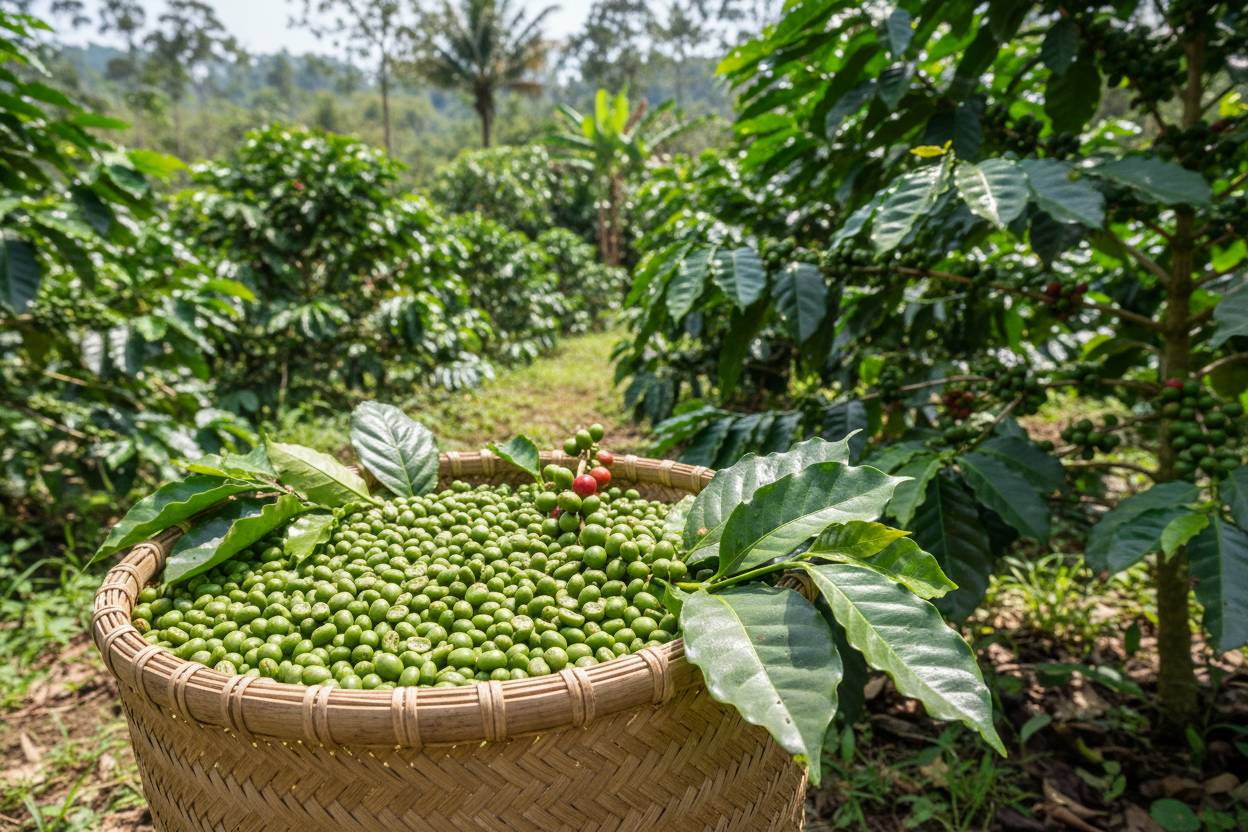
With our partner farmers in Cameroon, it's different. Each cherry is picked by hand, at perfect ripeness — recognizable by its deep red colour. This simple gesture changes everything:
• Only beans at peak ripeness are harvested → maximum concentration of sugars and aromas
• No green or damaged beans in the batch → less unpleasant bitterness, greater gustative purity
• Multiple passes through the same plantation → farmers return to pick as ripeness progresses
• Care for the bean that begins long before roasting
4. The Aroma Map: What You'll Discover in Your Cup
Coffee professionals use an "aroma wheel" to describe what they smell and taste. Here's what DJENDE Cameroonian coffee reveals depending on your brew method:
|
Brew Method |
Dominant Aromas |
Mouth Experience |
|
Filter / Pour-over |
Cherry, raspberry, light citrus |
Light, delicate, highly aromatic |
|
French press |
Caramel, hazelnut, milk chocolate |
Round, smooth, medium body |
|
Espresso (Robusta) |
Dark chocolate, spices, soft smoke |
Intense, powerful, creamy |
|
Cold brew |
Dark fruits, caramel, vanilla |
Naturally sweet, very smooth |
|
Moka / Percolator |
Hazelnut, burnt caramel, woody |
Structured, warming |
5. Why These Aromas Are Found Nowhere Else
A coffee's aromas are not the result of chance — nor of roasting alone. They are the expression of terroir: altitude, soil, rain, shade, plant variety, and the hands that picked each bean.
Cameroonian coffee benefits from a unique combination: volcanic soil + high altitude + hand picking + natural drying. Change any one of these elements, and the aromatic profile changes radically. This is why no industrial plantation can replicate what our partner farmers produce naturally.
At DJENDE, we change nothing about this equation. We preserve it — from our lands to your cup.
✨ Ready to explore Cameroon's aromas?
Discover our Arabica and Robusta coffee range — directly sourced, packaged in Canada.
DJENDE • From Our Lands to Your Cup • djende.ca • @djende.ca

Leave a comment
This site is protected by hCaptcha and the hCaptcha Privacy Policy and Terms of Service apply.